
Pelvic Floor Strengthening Treatment in Bangalore
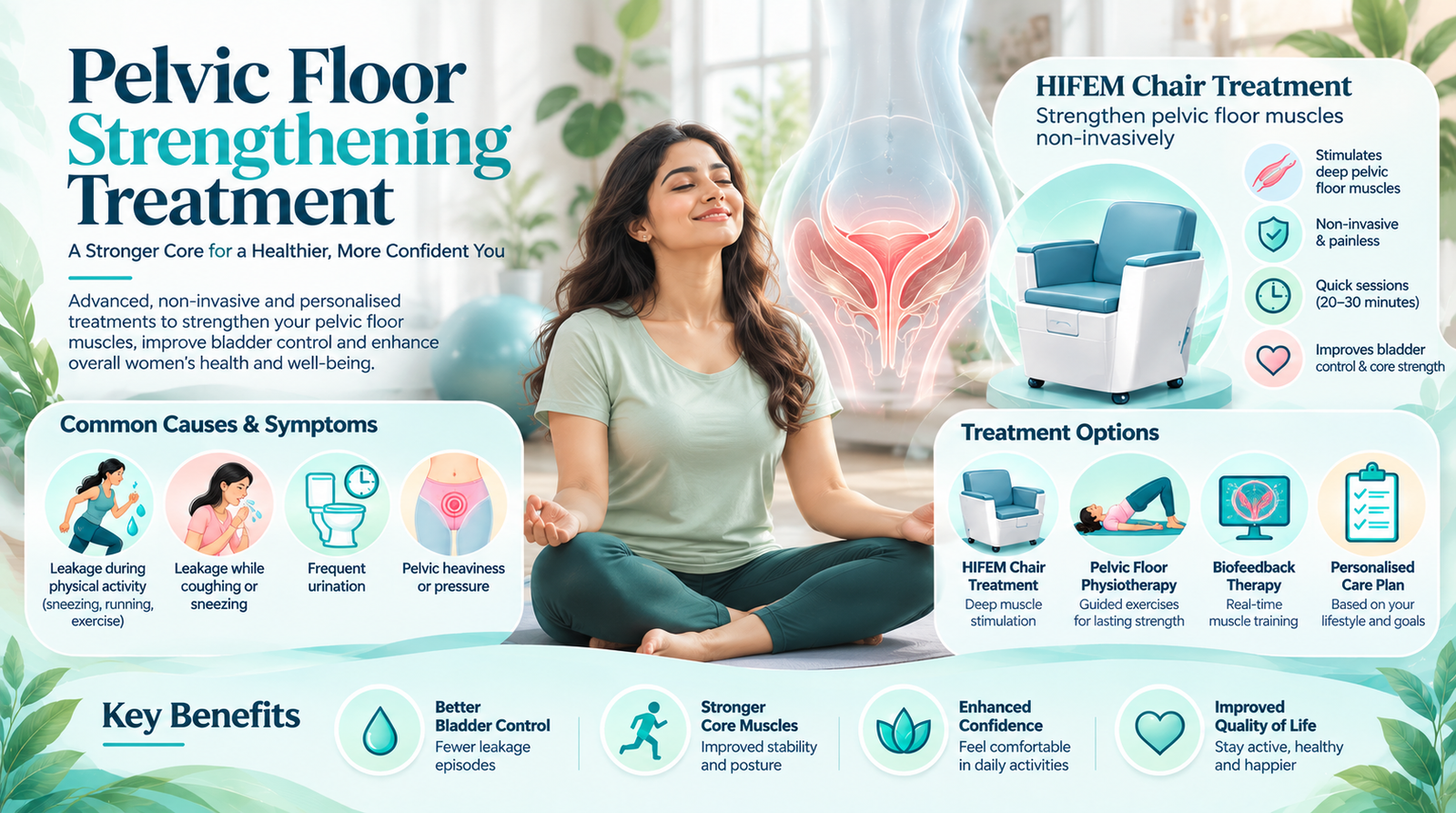
Your pelvic floor is the group of muscles that supports the bladder, uterus and bowel. After pregnancy, childbirth, menopause or years of strain, these muscles can weaken, leading to bladder leakage, a feeling of heaviness and reduced confidence. At Aikya Fertility, Dr. Dhathri Suresh offers doctor-guided pelvic floor strengthening in Bangalore, combining proper assessment, guided exercises and non-surgical HIFEM Chair Treatment.
About This Treatment
What you need to know
What Is the Pelvic Floor?
The pelvic floor is a sling of muscles across the base of the pelvis. It supports the bladder, uterus and bowel and helps control the flow of urine. Like any other muscle group, it becomes stronger with exercise, as explained in this patient guide from Cambridge University Hospitals, and it can weaken when it is overstretched or under-used.
Signs of a Weak Pelvic Floor
- Bladder leakage: a little urine escaping when you cough, sneeze, laugh, lift or exercise. See our page on Urinary Incontinence Treatment in Bangalore for the medical types.
- Sudden urgency: a strong need to pass urine that is hard to hold.
- A heavy or dragging feeling in the pelvis, which may point to a prolapse.
- Reduced muscle tone or vaginal laxity, sometimes noticed as a change in comfort or intimate wellbeing.
- Reduced bowel control in some women.
What Weakens the Pelvic Floor?
Pregnancy and vaginal delivery are the most common reasons, and many mothers look for postpartum pelvic floor recovery. Hormonal change around menopause, ageing, being overweight, chronic constipation, a long-standing cough and repeated heavy lifting can add to the strain. The NIDDK overview of bladder control problems notes that childbirth, menopause and ageing can all contribute. If you are expecting, our Labour and Birth Education sessions help you prepare for delivery.
Pelvic Floor Strengthening Options at Aikya
- Assessment first: a gynaecologist examines you to check muscle strength and look for related problems such as prolapse or infection.
- Guided pelvic floor exercises: many women find it hard to contract the right muscles, so correct technique matters. Pelvic floor muscle training is also the conservative first step described in NHS guidance on treating urinary incontinence.
- HIFEM chair treatment: you sit fully clothed while electromagnetic stimulation triggers deep, repeated pelvic floor contractions. It is non-invasive and needs no anaesthesia. Read more about HIFEM Chair Treatment in Bangalore.
- Healthy habits: weight, bowel habits, fluids and lifting technique, supported by our Srishti Program.
- Surgical options when needed: if a prolapse is present, treatments such as Laparoscopic Vault Suspension can be discussed.
HIFEM Chair vs Kegel Exercises vs Surgery
Kegel exercises are free and effective when done correctly, but they depend on technique and daily discipline. HIFEM triggers the contractions for you, so there is no effort required, and it involves no incisions or recovery period. Surgery is generally reserved for severe cases as advised by your doctor. Many women combine HIFEM sessions with guided exercises for longer-lasting support.
Pelvic Floor Strengthening and Intimate Wellness
Pelvic muscle tone affects bladder control, comfort and confidence. If you also have concerns about vaginal laxity or intimate wellbeing, your doctor can discuss them during the same consultation, including options under cosmetic gynaecology care in Bangalore and the wider range of Cosmetic Gynaecology Treatments. Chronic pain is assessed separately, and our team also provides care for chronic pelvic pain.
Why Choose Aikya for Pelvic Floor Strengthening in Bangalore?
- Doctor-Led Assessment: treatment is planned after an examination, not sold as a fixed package.
- Non-Surgical Technology: HIFEM chair therapy for women’s pelvic and intimate wellness.
- Private & Confidential: a safe space to discuss concerns many women find hard to raise.
- Care at Every Stage: postpartum recovery, menopause support and pelvic health under one roof.
- Convenient for South Bangalore: consult at our J.P. Nagar centre or our Kanakapura Road clinic.
Treatment Process
Step-by-step journey to better health
Private Consultation
Discussing your symptoms, delivery history, menopause status and what you want to improve.
Pelvic Examination & Assessment
A gynaecologist checks muscle strength and looks for related issues such as prolapse or infection.
Personalised Strengthening Plan
Guided pelvic floor exercises, plus habit changes for weight, bowel health and lifting technique.
HIFEM Chair Sessions
Non-surgical, in-clinic sessions on the HIFEM chair to stimulate deep pelvic floor contractions, if clinically suitable.
Review & Maintenance
Tracking your progress and planning a simple routine to keep the muscles strong over time.
Key Benefits
Why patients choose this treatment
Who Should Consider This?
Is this treatment right for you?
New mothers wanting postpartum pelvic floor recovery, women who leak urine when they cough, sneeze, laugh or exercise, women with reduced pelvic muscle tone or vaginal laxity, women in or approaching menopause, and anyone who wants to protect pelvic health before or after pregnancy. Your gynaecologist will confirm which approach suits you after examination.
Important Considerations
What to discuss with your doctor
Please consult our specialists to understand how these considerations apply to your individual case.
- Assessment Comes First: A heavy feeling, pain, bleeding or infection symptoms need to be checked before strengthening treatment. See a doctor promptly if you have pain, blood in the urine or sudden loss of bladder control.
- Results Take Time: Response depends on age, starting muscle strength and consistency, and regular exercises help sustain the benefit.
- HIFEM Suitability: It may not be suitable if you are pregnant, have a pacemaker or other electronic implant, metal implants near the treatment area, or an active pelvic infection.
- Mild Side Effects: Some women notice temporary muscle fatigue or soreness in the pelvic or thigh area after a session.
- Severe Weakness or Prolapse: Your doctor may discuss other treatment options, including surgery, if strengthening alone is not enough.
Frequently Asked Questions
Answers to common questions
It is a set of treatments, such as guided exercises and HIFEM chair therapy, that aim to improve the strength and tone of the muscles supporting your bladder, uterus and bowel.
Common signs are leaking urine when you cough, sneeze or exercise, a sudden urgent need to pass urine, a heavy or dragging feeling in the pelvis, and reduced muscle tone. A gynaecologist can confirm this with an examination.
Yes. Many women look for postpartum pelvic floor recovery, and HIFEM may be considered once your doctor confirms you have recovered enough and treatment is suitable. Guided exercises are usually part of the plan.
They help many women, but they need correct technique and daily consistency. NHS guidance lists pelvic floor muscle training as a first-line step, and your doctor can check you are using the right muscles.
You sit fully clothed on the chair while electromagnetic energy makes the pelvic floor muscles contract deeply and repeatedly, more strongly than most women can manage with voluntary exercises alone. See our HIFEM chair treatment page for details.
It is commonly used for mild to moderate stress urinary incontinence. Read more on our urinary incontinence treatment page. The right option depends on the cause of leakage, which is why assessment comes first.
Pelvic muscle tone affects comfort and confidence, so the two are often discussed together. Your doctor can explain non-surgical and cosmetic gynaecology options during your consultation.
You can consult Dr. Dhathri Suresh at Aikya Fertility. Treatment is planned after a proper examination so it suits your symptoms.
You can consult us at our J.P. Nagar centre or our Kanakapura Road clinic, which serves women across Banashankari, Uttarahalli and Konanakunte.
You can schedule a private consultation via our appointment form or chat with us on WhatsApp.